
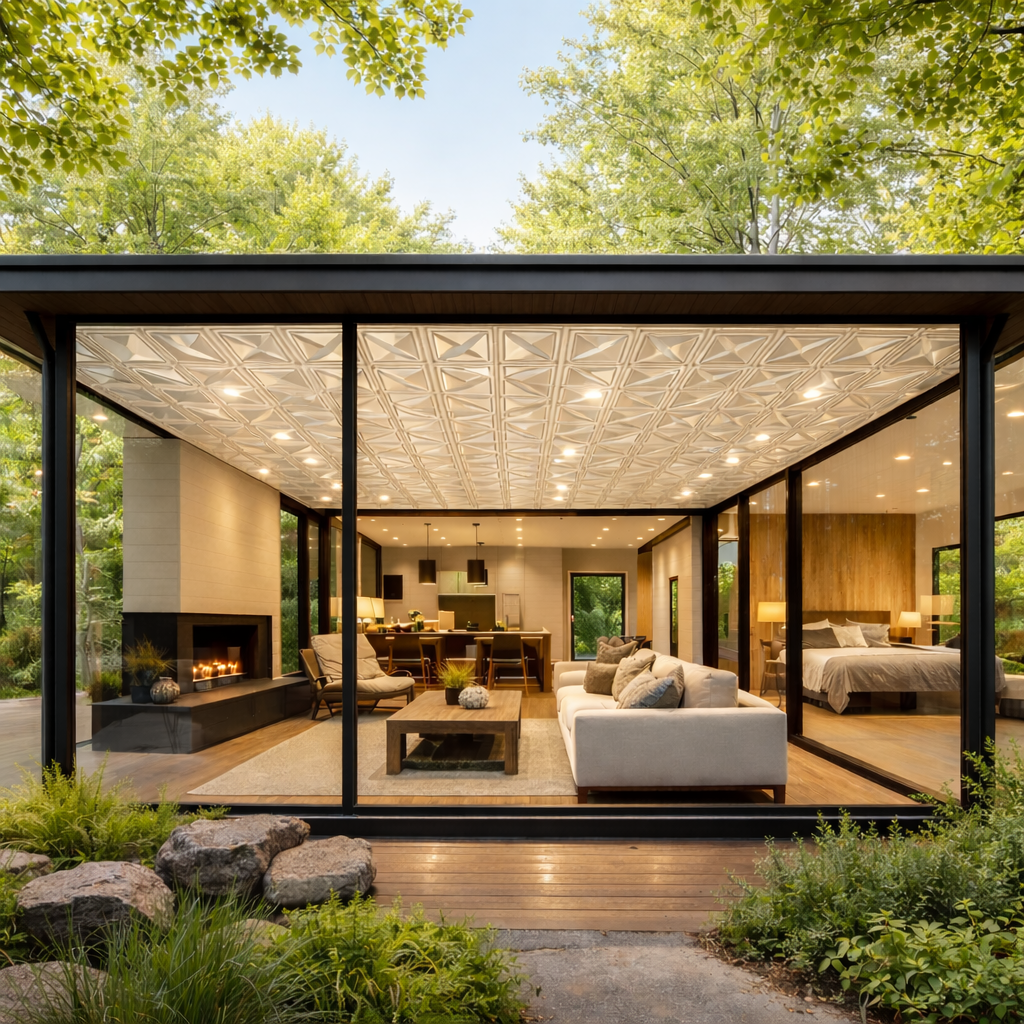


The Four Environmental Advantages of Metal Ceiling Tiles
The building industry generates more waste than almost any other sector in America. In an average year, construction and demolition projects send 145 million tons of debris to landfills, nearly matching all household garbage nationwide despite representing just a fraction of total building activity. For those of us who make building materials, these numbers should be sobering. For those who specify them, they should be decisive.
We've manufactured pressed metal ceiling tiles at Shanko for 125 years, long enough to watch materials come and go and long enough to see our work outlive the buildings around them. That longevity isn't just good business; it's an environmental imperative. Every tile that lasts a century is one fewer ceiling replacement sent to landfill, one fewer manufacturing run that consumes energy, and one fewer shipment that burns fuel.
But durability alone doesn't tell the whole environmental story. The materials we start with, the processes we use, the distance our products travel, and their end-of-life fate all matter. This is especially true as building codes evolve, green certifications become standard, and clients increasingly ask not just "will this work?" but "what's the real cost?"


 Since 1896
